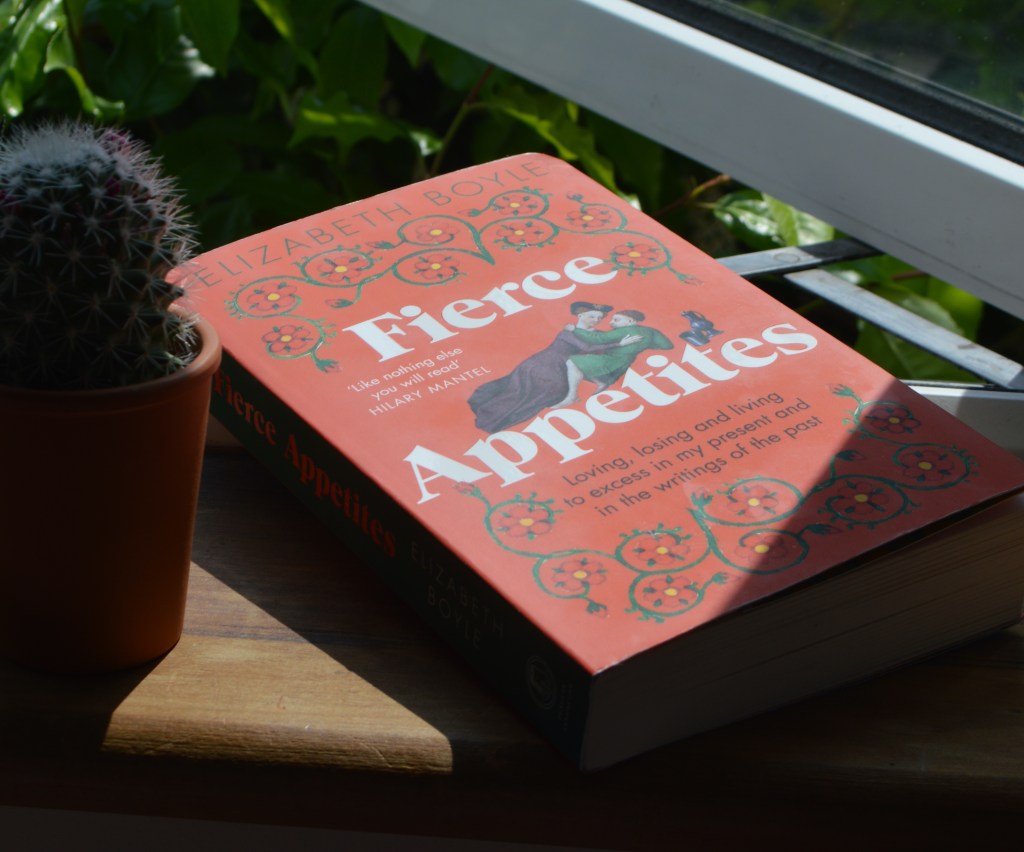
It was the blurb that convinced me to read Fierce Appetites. I know blurbs are not to be trusted but there it was on the cover, none other than Hilary Mantel saying this book was “like nothing else you will read”, and I thought, Hilary Mantel would never lie. All I knew about the book was that it had something to do with Irish history, a topic that I am really interested in since I’ve been living in Ireland for almost a year now, and although it was a very enjoyable and interesting read, I wouldn’t say it is super original in its topics or format. It actually reminded me of a couple of authors and books I love, like Rebecca Solnit’s The Faraway Nearby, because of how Boyle knits together her personal history with her academic discipline, and of the genre-defying works of Helen Macdonald, H is for Hawk and Vesper Flights. These comparisons are, of course, compliments.
The way in which the author tightly knits her personal history together with medieval history and the lore and myths she has studied for a great part of her life celebrates the freedom of the essay as a kind of literature that cannot be constrained. That being said, I found the balance to be more inclined towards self-exploration and identity than history or folklore, and in that way I think more of it as a memoir infused with some lore and history.
Fierce Appetites is mostly a first-person account of the life of the author, in which she gives herself the liberty to reflect on her past and present circumstances drawing parallels with the Middle Ages. All we have, she rightly acknowledges, are stories: whether they are the ones we tell ourselves about our own lives, the ones we learn in school about the places we live in, or the ones we pass on from generation to generation. This emphasis on the importance of storytelling both in everyday life and in academic practice (she is, after all, a historian) is probably my favourite aspect of the book. Boyle’s prose is also highly entertaining, not only because her anecdotes get wild, but also because she started writing in that infamous year, 2020.
The book is divided into twelve chapters, each of them devoted to a month in that fateful year when the world came to a standstill. Every month, too, reflects on a topic — grief, memory, and inheritance were among my favourites. In January we learn a bit about Elizabeth Boyle’s job as a professor in Medieval History, and soon she starts unravelling the thread of her life and the moments that haunt her, bringing to life the Irish myths she has spent decades studying. As the months advance and lockdowns, mayhem and fear arrive, the modern world begins to have more and more similarities with the uncertain times of death and plagues that the people of the Middle Ages faced, and Boyle points out how we might share more than we think we those people from the past whom we have unfairly labelled as unintelligent and brutish.
At many points along this riveting journey, we find Boyle reflecting on storytelling and what it means for her to be a medievalist and a historian. Another thing I enjoyed about the book was the fierce defence of what detractors have called “revisionist” history. One cannot, after all, realise that culture is primarily supported by stories without realising that history and national histories are still to be interpreted and reinterpreted, rather than set in stone. History is a work in progress: people keep discovering things about the past all the time, and bringing these stories forward is important, but so it is to revise those stories we take for granted and try to see them through different lenses.
Although the subject Boyle specialised in might seem outdated and dry to some, the parallels she manages to draw between the heroes and villains of Irish folklore and modern-day humans are enlightening. Her view of history is also very modern, as she constantly reminds the reader that history and the past are not the same: the past is set and gone, but history is the narrative we build about it with the resources we have— resources that, as time and technology advance, give us more tools to draw a wider picture and learn more about the existence of those who have lived before us.
My inner academic was very happy to read about language and discourse, and the roles they play in shaping our understanding of the past from a historian (especially because sometimes historians forget to question and revisit their discipline). The year of the pandemic, as Boyle recounts, was turbulent in other ways, and “official history” was called into question: Black Lives Matter took to the streets, statues were taken down and many people came forward to denounce police brutality and racial profiling. Amidst all this chaos and uncertainty, Boyle calls us to remember the importance of stories and language in helping us make sense of our lives. Whether they be stories we tell ourselves about the past, stories we as a community agree to believe about the world, or stories we regard as true from the past because they give us a sense of identity or belonging, our existence as humans and societies is fundamentally built on them.
Finally, I found it very interesting to see Boyle debunking some common myths about the Middle Ages by bringing forward not-so-popular stories about women who fought and loved fiercely, same-sex lovers and other amusing tales about monks and nuns, princes and queens, gods and monsters. It’s nice to remember that during the period we have unjustly called the Dark Ages, people have loved and lost and understood the world in terms not so different to how we do now. Fierce Appetites is a very interesting and entertaining read, both funny and moving, and I will be on the lookout for other non-academic books Elizabeth Boyle publishes in the future.
I would recommend this book if you enjoy reading memoirs and learning about history. Also, if you want to read more non-fiction and don’t know where to start, this one is good. Let me know if you’ve read Fierce Appetites and what you thought of it!
Also, I am new on Substack and will be using that platform for any newsletters, so don’t forget to subscribe here!

 fernanda ortega // flowers in the library